


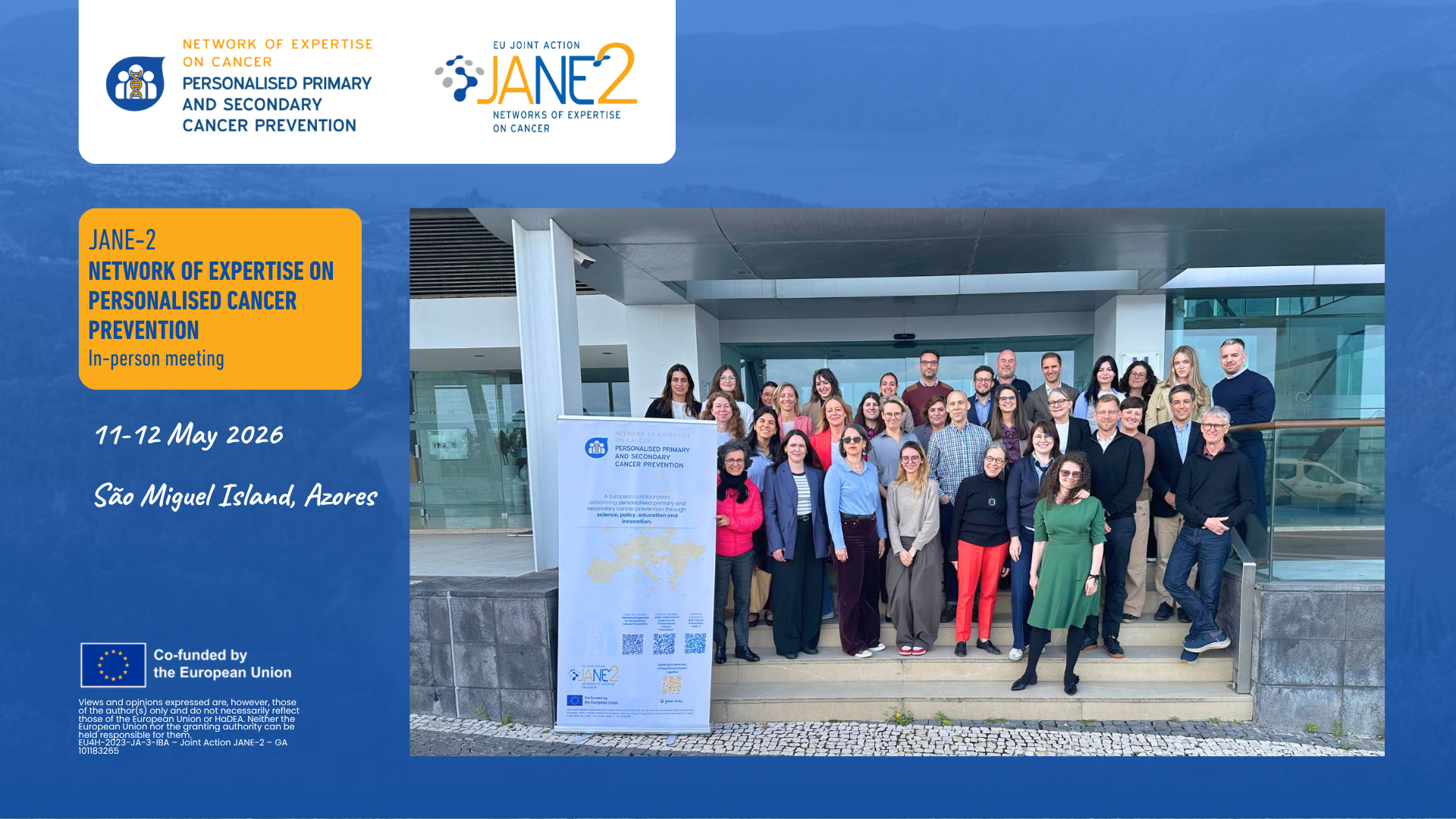
Personalised cancer prevention is becoming one of the most important frontiers in public health in Europe. It is a move away from broad prevention to approaches that take into account individual risk, health system realities, scientific evidence and equity. This common ambition brought together the JANE-2 Network of Expertise on Personalised Primary and Secondary Cancer Prevention in Ponta Delgada, Azores, for its annual in-person meeting on 11–12 May 2026.
Organised by the Azores Oncology Centre, the meeting had 35 participants in person on the first day, with other partners participating remotely, in order to contribute to the discussions and to follow the progress of the network. The meeting was designed as a working forum for strategic alignment, scientific exchange and operational planning, in support of the transition of WP8 from initial coordination towards a more structured implementation phase.
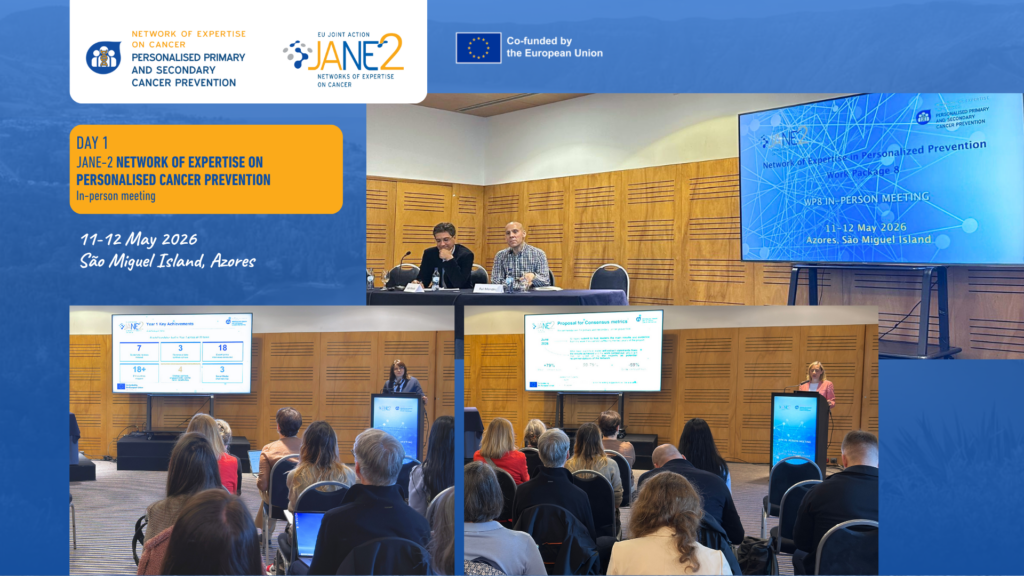
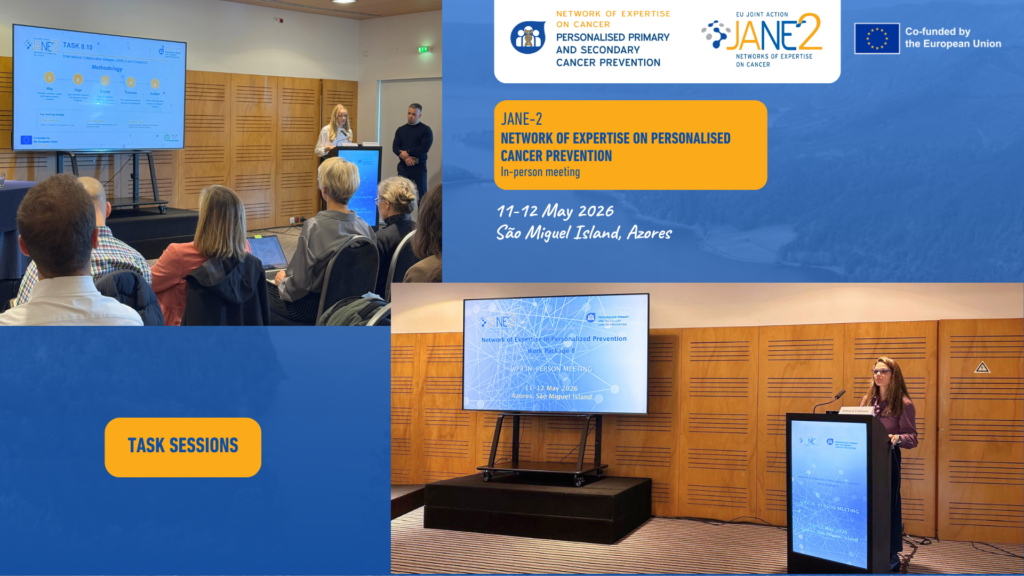
The programme was opened with welcome remarks by João Macedo, from Azores Oncology Centre, followed by an overview of WP8 by Dr. Delia Nicoară, Oncology Institute “Prof. Dr. Ion Chiricuță” Cluj-Napoca, and Prof. Stefania Boccia, Fondazione Policlinico Universitario Agostino Gemelli IRCCS. From the beginning, discussions emphasised that personalised prevention is not solely focused on identifying individual risk. It also requires an understanding of the systems in which prevention occurs; how health professionals are trained, how people access information, how screening policies are designed, how data is used responsibly, how inequalities are addressed, and how recommendations are translated into real-world practice.
Scientific progress: from education to risk-based prevention
Day one provided a comprehensive overview of the scientific work developing internally in the Network. The sessions focused on how WP8 is developing the evidence base needed to facilitate more targeted and equitable approaches to personalised cancer prevention and screening.
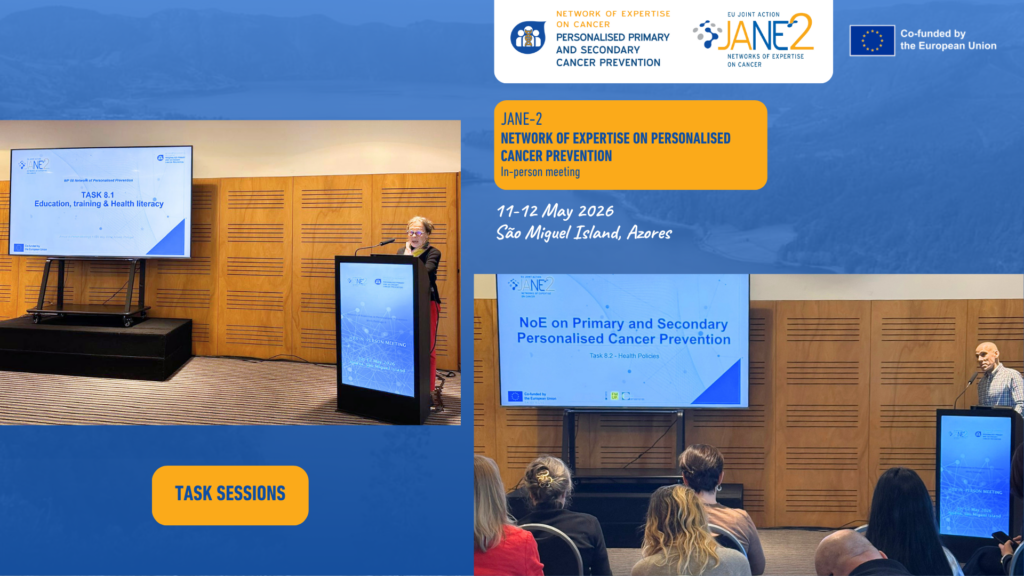
Béatrice Fervers (Unicancer) presented Task 8.1 on Education, Training, and Health Literacy, which highlighted ongoing efforts to map existing training programmes and assess healthcare professional needs in personalised cancer prevention, raise awareness and literacy about personalised cancer prevention and screening, and conduct a survey of healthcare professional needs in personalised cancer prevention, which had received 136 responses from 18 countries by early May 2026. The discussion emphasised the importance of addressing the current fragmentation of training in personalised cancer prevention, as well as strengthening the links between research, implementation, and health literacy.
Rui Amaral Mendes (Faculty of Medicine, University of Porto) presented Task 8.2 – Health Policy, which focused on the development of long-term and efficient health policies for personalised cancer prevention and screening. The task force conducted interviews with policymakers, institutions, and patient representatives from various member states. Preliminary findings indicated that personalised prevention has entered the policy vocabulary, while also emphasising the importance of integrating personalised prevention beyond oncology departments into primary care pathways.
Task 8.3 Lifestyle Aspects, presented by Denis A. Sarigiannis of the National Hellenic Research Foundation, featured a comprehensive systematic review looking at how modifiable behaviours and environmental exposures affect cancer incidence, mortality, recurrence, and survival. The work contributes to WP8’s goal of moving prevention away from single-risk-factor approaches and towards composite models that incorporate lifestyle, environmental, genetic, and epigenetic data into personalised prevention frameworks.
Task 8.4 Mapping Personalised Initiatives and Clinical Utility of Omics, presented by Stefania Boccia, focused on mapping existing personalised prevention approaches and assessing the role of omics sciences in guiding preventive decisions. The task is contributing directly to the future recommendations on personalised prevention and screening through systematic reviews on genomics, PRS, transcriptomics, proteomics, radiomics and metabolomics.
Task 8.5 Genetic and Epigenetic Risk, presented by Sara Miccoli from IRCCS Azienda Ospedaliero-Universitaria di Bologna, addressed unmet needs in identifying and managing individuals at increased cancer risk due to genetic or epigenetic factors. The task is advancing systematic reviews on moderate-penetrance genes, epigenetic biomarkers and early markers for lung and pancreatic cancer, alongside a survey on the implementation of surveillance strategies and cascade testing in BRCA and Lynch syndrome carriers.
Preparing the network for long-term impact
The afternoon sessions focused on the transversal structures that support the long-term functioning of the Network, placing a strong emphasis on the structures needed to make the Network effective beyond individual activities.
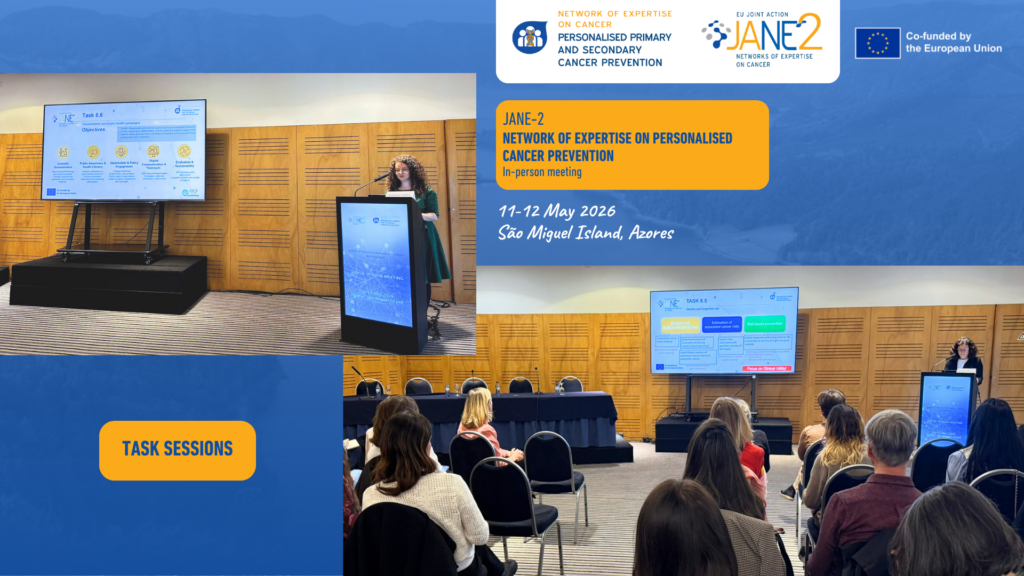
For personalised prevention to be effective, evidence must be translated into accessible, validated, and audience-specific communication. Andrada Diana Todea of the Oncology Institute “Prof. Dr Ion Chiricuță” Cluj-Napoca presented Task 8.6 Dissemination and Health Campaigns, which positioned dissemination as a transversal mechanism dedicated to strengthening synergies between scientific activities and dissemination efforts to support the translation of evidence into actionable prevention strategies, communication initiatives and future recommendations.
Ensuring that this work remains aligned with the Network’s objectives requires a clear evaluation framework. Task 8.7 Evaluation, led by Lillebaelt Hospital and presented by Jesper Jensen, focused on the mechanisms that will support monitoring, learning and quality assurance across WP8. Through KPIs, surveys, interviews and cross-task coordination, the evaluation process will help the Network assess progress, identify gaps and ensure that activities remain connected to the expected outputs and impact of JANE-2.
Moderated by Per Magnus Mæhle and Keith Peavy from Oslo University Hospital, the governace session (Task 8.8) invited participants to reflect on the future governance of the network as an “infrastructure of trust”. The discussion explored how WP8 can evolve from a project-based structure into a flexible, agile and sustainable community for coordination, learning and decision-making.
Antuca Callejas from Fundesalud presented Task 8.9 – Sustainability, which focused on long-term continuity. The session focused on how the Network can remain viable beyond short-term EU project funding and how personalised prevention can be integrated into healthcare systems over time. The proposed approach investigated a hybrid sustainability model centred on core public funding, integration funding, value-based funding, innovation funding, and scaling and transferability funding.
Task 8.10 International Collaboration and Synergies JANE-2 – EUnetCCC, presented by Tania Schreiner and Stefan Matei from IOCN, focused on connecting WP8 prevention knowledge with Comprehensive Cancer Centres and other EU-level initiatives. The task aims to create a pathway through which WP8 outputs can be adapted, validated and disseminated across European cancer centres.
Institutional exchange: visit and twinning activities
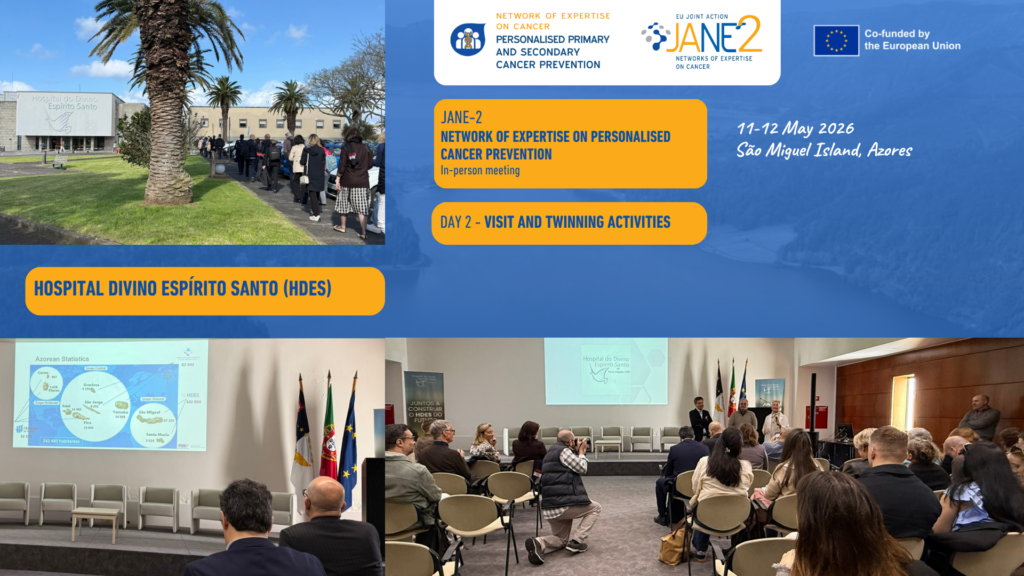
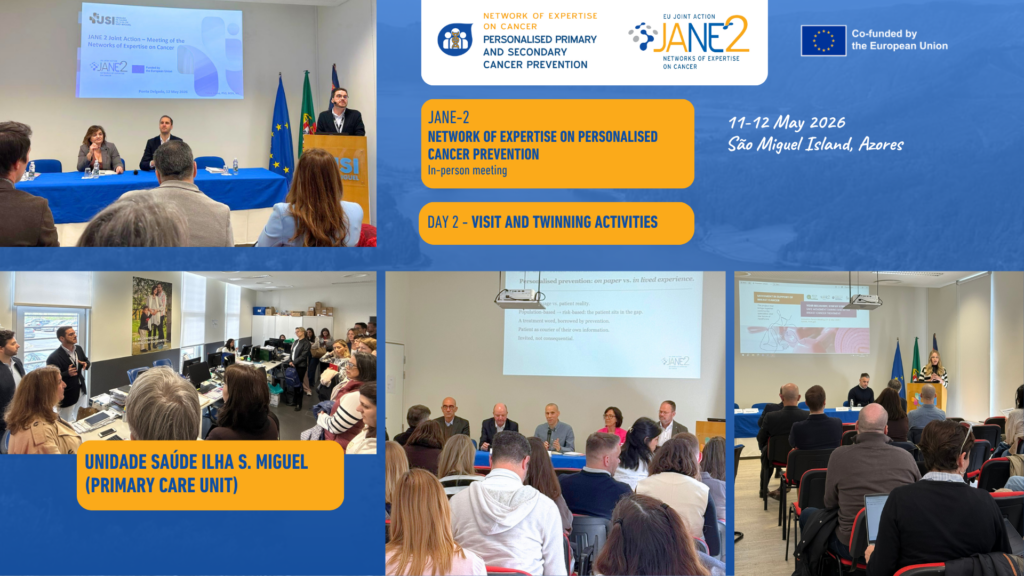
On the second day, participants visited Hospital Divino Espírito Santo and the Unidade Saúde Ilha S. Miguel Primary Care Unit, where discussions focused on twinning, primary healthcare and the integration of prevention into real-world care pathways. The programme also included the panel “Communicating to Prevent: Valuing Patient Co-creation in Personalised Cancer Prevention Policies”, bringing together patient representatives, healthcare professionals and policy voices to discuss how personalised prevention policies can better reflect patient needs and lived experience.
The meeting provided an important space for strategic alignment, scientific exchange, and operational planning, with a focus on how these areas intersect and how their combined results can support practical tools, policy recommendations, and implementation pathways, all with a common goal: to advance more personalised, evidence-based, and equitable approaches to cancer prevention and screening across Europe.
Personalised prevention is not only about identifying individual risk. It also means understanding the systems in which prevention takes place: how healthcare professionals are trained, how citizens access information, how screening policies are designed, how data is used responsibly, how inequalities are addressed and how recommendations can be translated into real-world practice.